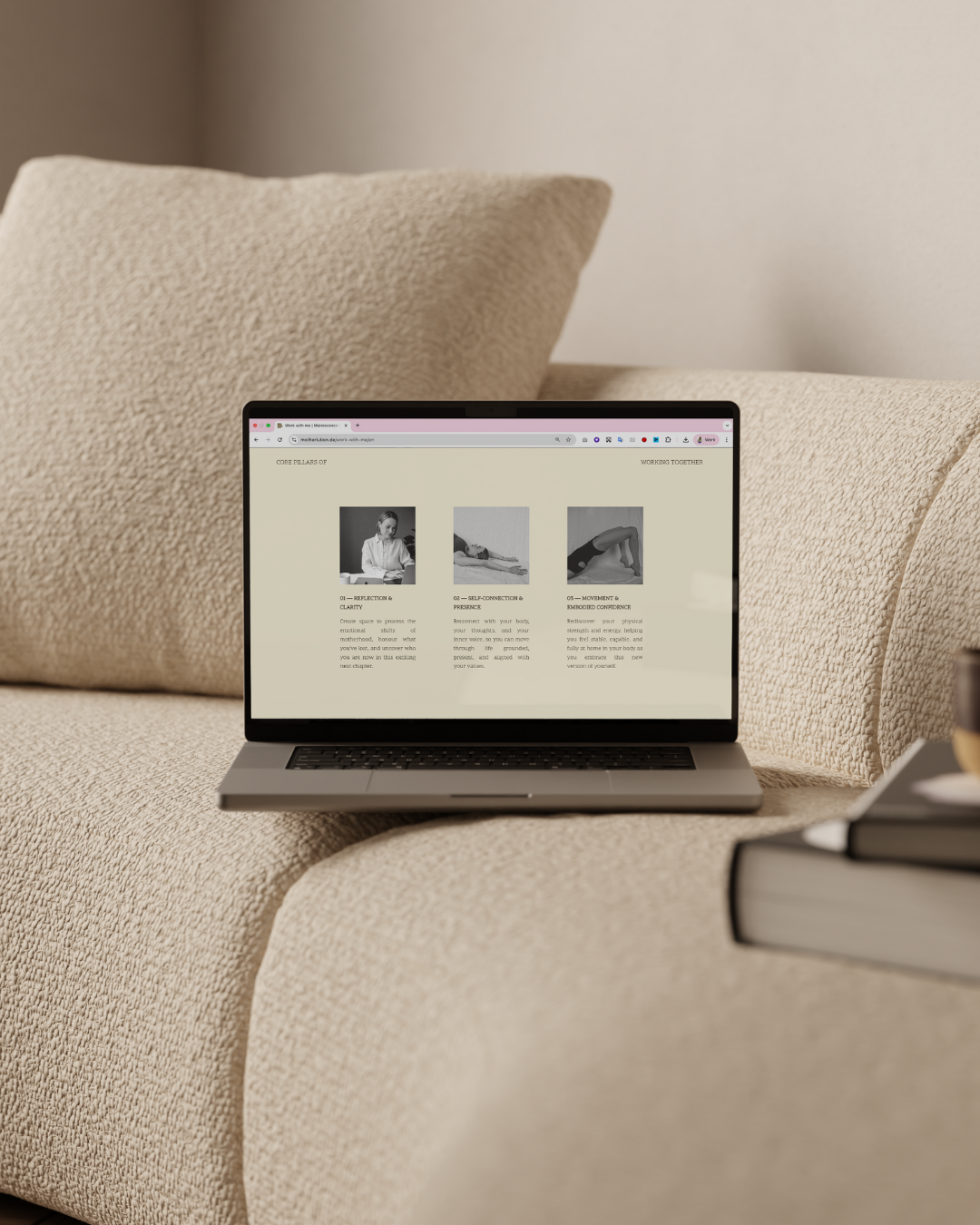
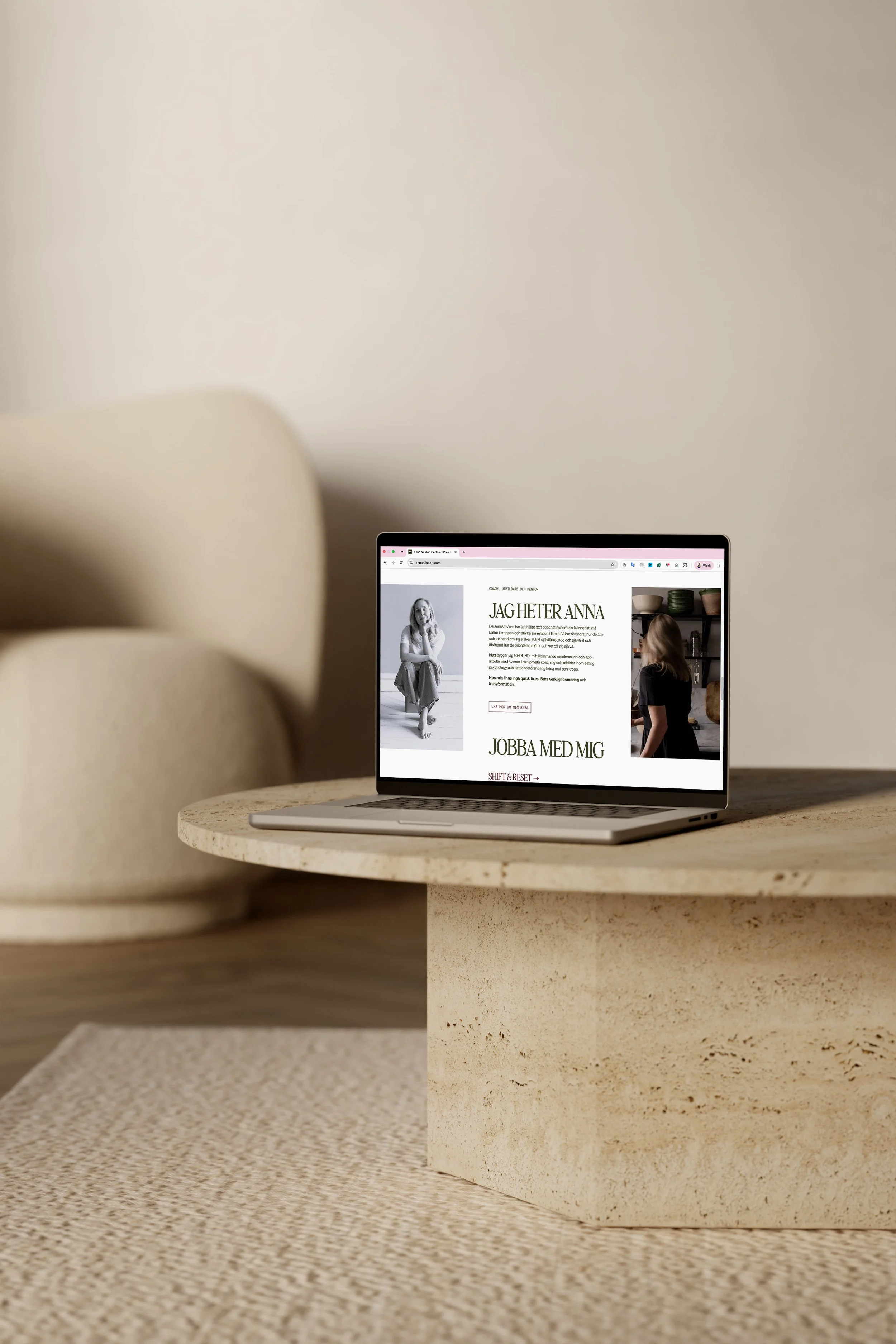
How to Use Brand Photography on Your Website So People Actually Trust You
When you’re a coach or service provider, your website isn’t just selling a neat little package with a list of features. It’s helping someone decide whether they trust you. And that’s why your brand photography matters so much.
People are choosing the person behind the work as much as the offer itself. They’re looking at your website and quietly trying to work out whether you feel credible, warm, experienced, thoughtful, safe, interesting, relevant, professional, or whatever else they need to feel before they take the next step.
This is especially true if your expertise, personality, point of view, process, and reputation are a big part of why clients choose your business. Your website can have the clearest copy in the world, but if the visuals feel generic, outdated, or disconnected from who you are now, a perfect-fit client may still not enquire.
Good brand photography helps close that gap. It makes the person behind the work easier to trust. It gives people a visual sense of your energy, your approach, and the level you’re operating at. It makes your website feel more human, more specific, and much less like it could belong to anyone else in your industry.
So, if you’re planning a photoshoot for your next website, or you already have a bank of images and you’re not quite sure how to use them properly, here’s what I’d be thinking about.

Your photos should support the buying decision, not just make the page look pretty
This is the mistake I see a lot. People book a brand shoot because they know they need “better photos”, but they don’t always think about what those photos actually need to do on the website. So they end up with a folder full of lovely images, but not necessarily the right mix of images to support the pages, offers, and buying journey.
And I get it, because when you’re planning a shoot, it’s very easy to get caught up in the outfits, locations, poses, and Pinterest board. All of that matters, of course, but the most useful place to start is with the website itself.
What do people need to understand when they land on your homepage?
What do they need to feel before they enquire?
Where do you need to build trust?
Where do you need to show your personality?
Where do you need a calmer image that gives the page space to breathe?
Where do you need something that shows more of your process, your working style, or the client experience?
Because brand photography isn’t just there to decorate the page. It should help people FEEL something about your business that the words alone can’t always do.
A strong website usually needs a few different kinds of photos:
Images where people can clearly see your face, because that helps build trust quickly.
Natural, relaxed shots that show your personality and make the site feel human.
Process-style images that show you working, writing, speaking, teaching, planning, recording or doing whatever is actually relevant to the way you support clients.
Wider lifestyle or detail images that help build the visual world around your brand without everything feeling like a headshot.
Choose a photographer who understands more than “nice photos”
A good brand photographer should be able to take beautiful images, of course. But for a website, you need more than someone who can make you look lovely in good light. You need someone who understands that your photos have a job to do.
They should be thinking about your brand, your audience, your website layout, your offers, your personality, and how the images will actually be used. They should be able to guide you on the kinds of shots you need, not just ask you to turn up with a few outfits and hope for the best.
Before you book someone, look through their portfolio and ask yourself whether their work feels natural, considered, and varied. Do their clients look relaxed, or does everyone look a bit stiff and overly posed? Do the photos have enough space around them for website banners and text overlays? Is there a good mix of close-up, mid-distance and wider shots? Can you imagine the images working across a homepage, about page, offer page and social content?
This is also where it helps to choose someone whose style actually fits the feeling you want your brand to create. A great photographer can still be the wrong fit if their work is too corporate, too editorial, too moody, too bright, too polished, or too casual for the kind of experience you want people to have when they land on your website.
The goal is for the images to feel like they belong in the same world as your messaging, your offers and the clients you want to attract.
Plan your outfits around how you want people to feel
I don’t think your outfit choices need to be wildly overthought, but they do need to be intentional. What you wear in your photos sends a signal. It helps shape how people experience you before they’ve even read the copy. That doesn’t mean you need to dress like some made-up “professional business owner” version of yourself (because that usually just ends up feeling awkward and a bit disconnected), but it does mean thinking about what your clothes communicate.
If you’re a leadership coach working with senior professionals, your outfits might need to feel polished, grounded and credible, while still having enough personality to feel like you. If you’re a wellbeing practitioner, therapist or coach doing more emotionally supportive work, your clothes might need to feel softer, calmer or more approachable. If your work is creative, direct, energetic or slightly unconventional, your outfits can reflect that too.
The main thing is that you still need to feel like yourself. If you would never wear the outfit to meet a client, speak at an event, host a workshop or record content for your business, it probably isn’t the right thing to wear for your brand photos. People can usually feel when someone looks uncomfortable, and you don’t want your website photos to feel like you dressed up as a business you don’t actually run.
It’s also worth thinking practically about how the outfits will work with your website. Colours that sit well with your brand palette will usually feel much more natural on the page than something completely random that suddenly becomes the loudest thing on the site. Tiny patterns can sometimes look a bit strange on camera, and very trend-led outfits can date quickly, so I’d usually aim for clothes that feel like a slightly elevated version of your real style rather than a costume.
A few outfit changes can give you enough variety without making the whole shoot feel chaotic. You don’t need to become a different person in every look. You just want enough range to use the images across different pages and types of content.
Use props and locations to make your work feel more real
Props can be very cheesy when they’re forced, but they can be genuinely useful when they help people understand the kind of work you do. For example, if you spend a lot of time on coaching calls, recording a podcast, planning workshops, writing client notes, creating resources, teaching or preparing sessions, there may be natural ways to show that in your photos. A laptop, notebook, phone, microphone, printed workbook, or book can all work if they actually make sense for your business and don’t look like they’ve been thrown into the shot for no reason.
The same goes for location. Your background tells part of the story. A calm home office, a beautiful studio, a city location, a hotel lounge, a natural outdoor setting, a coworking space or a softer lifestyle location will all create a different feeling. None of them are automatically right or wrong. It depends on your brand, your audience and what you want people to feel when they land on your website.
This is where I’d think less about what looks impressive and more about what feels aligned.
Where would your clients expect to experience your world?
What kind of environment reflects your work?
Do you need something calm and reassuring, or something more polished and high-level?
Do you want the images to feel warm and intimate, or more spacious and editorial?
Do you need a location that supports your personality, or one that lets the copy and design do more of the talking?
The best brand photos feel like part of the story your website is telling.
Make sure you have the right mix of images for your website
One of the most frustrating things is getting brand photos back and realising you have lots of lovely images, but not the ones you actually need for your website. For example, you might have plenty of close-up portraits but no wide horizontal images for your homepage banner. Or lots of smiling-at-camera shots, but nothing that feels more natural, spacious, or editorial. Or lots of lifestyle images, but not enough clear face shots to help build trust.
Before your shoot, it’s worth thinking about where the images will actually go. Your homepage will usually need a strong hero image, plus a few supporting images that help people feel who you are and what kind of work you do. Your about page will probably need images that feel personal and trustworthy, but still professional. Your offer pages may need photos that create calm, clarity, and confidence around the decision to work with you. Your contact page might need something warm and approachable, so the next step feels easy rather than intimidating.
You’ll also want a mix of portrait and landscape images, with some space around you in certain shots so they can work properly with website layouts. If every image is cropped tightly around your face, your designer will have much less flexibility when building the site.
I’d also recommend asking your photographer for a few short behind-the-scenes clips if they offer that. Even a handful of small video moments can be useful for Instagram Stories, Reels, launch content, or just showing a bit more of the human side of your business. Having a thoughtful mix of images will make your website, content, and marketing so much easier to pull together.
Your photos should show enough of you to make people trust you
I know having your photo taken can feel very awkward. Most of us don’t naturally love standing in front of a camera trying to look relaxed while being extremely aware of our hands.
But if you’re a coach or service provider, hiding behind stock images or tiny cropped photos of your laptop probably isn’t helping you. People want to see the person behind the work. They want to get a sense of your energy, your warmth, your confidence, your style, and your way of being. They want to know there’s a real human behind the website, especially if they’re thinking about investing in something personal, strategic, or supportive.
This doesn’t mean you need to perform some overly polished version of yourself. In fact, I’d argue the opposite. The best photos usually feel like you on a really good day. Still you, just a little more considered.
Let yourself look like a real person. Laugh if something is funny. Move around a bit. Talk to the photographer instead of trying to hold a frozen smile for too long. Bring a few poses or references if that helps, but don’t try to copy someone else’s entire brand shoot. The goal is for your photos to reflect you, not a Pinterest version of what you think your niche is supposed to look like!
The more your photos feel connected to your actual personality and way of working, the easier it is for the right people to feel something when they see them.
Brand photography is part of becoming easier to choose online
Brand photography is not just about looking polished on your website. It’s one of the ways you help people understand and trust the person behind the work. It gives your brand more depth, makes your website feel more personal, and helps your online presence reflect the level you’re actually operating at now.
If your current photos feel outdated, generic, overly staged, or like they belong to an older version of your business, that can quietly affect how your whole website feels. You might have strong copy, thoughtful offers and real proof, but if the visuals don’t match the calibre of the work, people can feel that disconnect even if they can’t quite explain it.
And this is really the bigger point. Your website should make you easier to trust, remember and choose. Your photography is one part of that. So are your positioning, messaging, proof, structure, design, and the way you guide someone towards the next step.
When all of those pieces work together, your website stops feeling like a collection of separate bits and starts feeling like a proper online home for your business.
If you’re planning a new website and want to get clearer on what photos, pages, proof and content you actually need before you start, my free Website Project Planner is a really good place to begin. It’s a Notion template that helps you map out your offers, who you’re speaking to, the proof you want front and centre, the pages you actually need and what still needs sorting, so you’re not starting your website project from a blank page and pure panic.
And if you already know your online presence has fallen behind the level of work you’re doing now, Web in a Week is my focused done-for-you process where we bring together your positioning, messaging, branding, website copy and Squarespace design, so your website finally helps the right people understand, trust and choose you.
Work with me
→ Web in a Week - done-for-you positioning, branding, website copy + Squarespace design for when your online presence has fallen behind the level of your business.
→ Ongoing Marketing Partnership - long-term done-for-you strategic + creative support across content, email, website updates, launches + more, for when marketing keeps getting pushed aside.