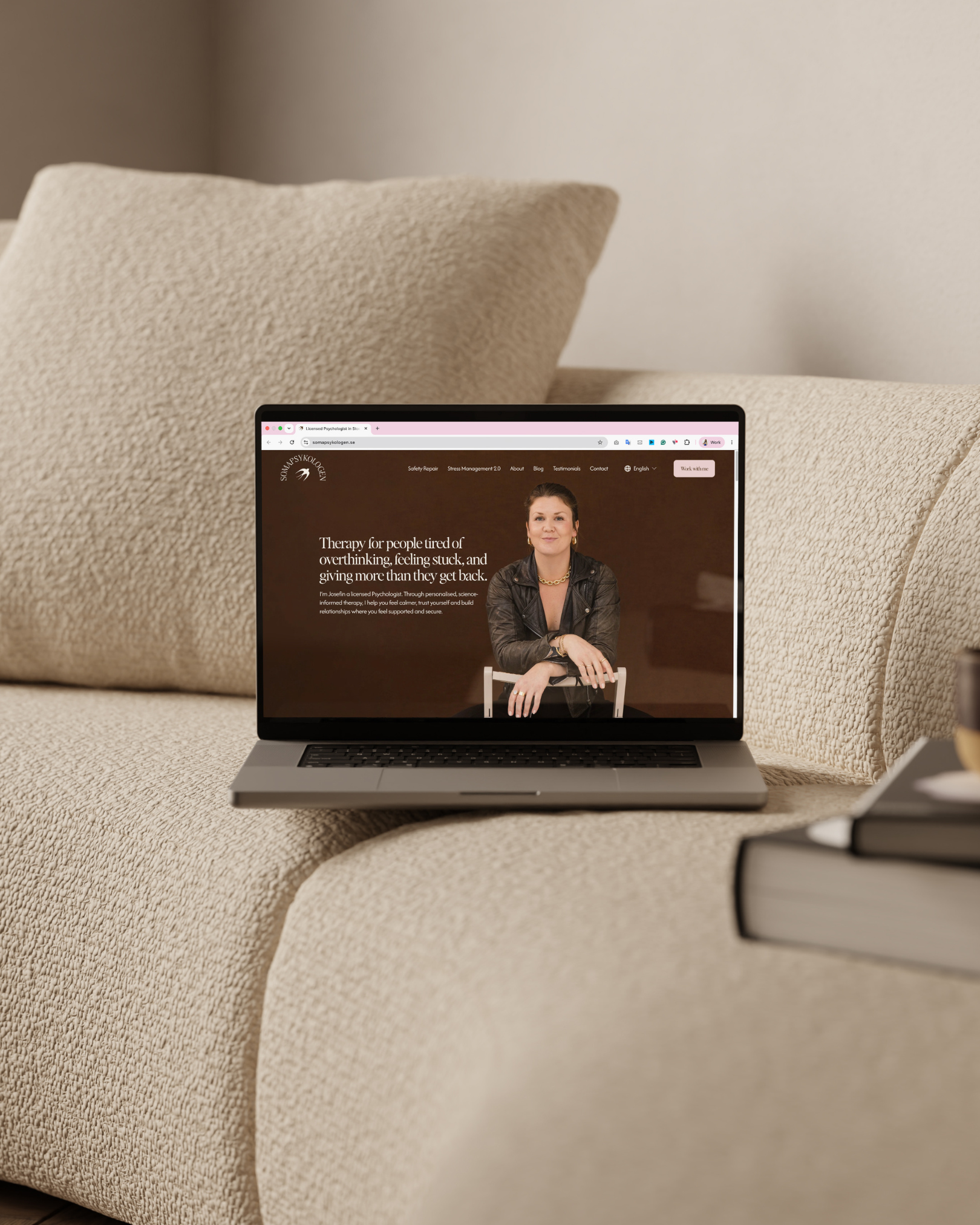
How Your Coaching Website Can Help the Right Clients Choose You Before They Book
If you’re an established coach or service provider, your discovery call shouldn’t be the first time somebody properly understands why they might want to work with you. By the time the right person gets onto that call, your website should already have done a lot of the work.
They should have a good sense of who you help, what you can help them change, how you work, why your approach is different, and whether they can actually see themselves working with you.
That doesn’t mean your website needs to aggressively “filter out” anyone who isn’t ready to buy immediately. People discover businesses at different stages, and somebody who isn’t ready today might be exactly the right client six months from now. But it should help people self-select.
The right person should be thinking… “Ohhhh, this is exactly what I’ve been looking for.”
And someone who genuinely isn’t a fit should be able to recognise that too, without either of you spending 45 minutes on a call trying to work it out.
Here’s what I’d focus on.
1. Make it immediately obvious who your work is actually for
One of the quickest ways to lose the right person is making them work too hard to figure out whether you can specifically help them. And I don’t just mean having a line that says:
“I help women aged 30-45 live their best lives.”
I mean understanding your clients well enough that the person reading your website recognises their actual experience.
What are they dealing with right now?
What are they fed up with?
What have they already tried?
What do they want to be different?
What tends to make them hesitate before getting support?
Good positioning helps somebody recognise themselves long before they’ve read every detail of your offer. For example, there’s a big difference between saying:
“I help women improve their relationship with food.”
and speaking to the person who is exhausted by thinking about food all day, swinging between trying to be “good” and feeling like they’ve failed, and wants to finally enjoy a pizza and not feel guilty for days after.
The more clearly somebody can see themselves in the problem and possibility you’re describing, the easier it is for them to decide whether they belong there.
2. Sell the cake, not just the ingredients
This is one of the biggest things I see on coaching and service-based websites. We get so close to our own offers that we start selling the mechanics:
12 coaching sessions
WhatsApp support
a personalised assessment
worksheets
monthly check-ins
a 90-day action plan
All of those things can matter when somebody is deciding whether the offer is right for them. But they’re the ingredients.
Your potential client is much more interested in the cake.
What becomes possible because they work with you?
Maybe they finally have enough energy left at the end of the day to enjoy their life.
Maybe they can set a boundary without spending the following 48 hours analysing whether they’ve upset somebody.
Maybe they stop second-guessing themselves every time they walk into a leadership meeting.
Maybe they finally understand what’s going on in their body and stop feeling like they’re constantly fighting against it.
Your website needs to connect what you do with why somebody actually wants it. When someone can see the destination, it becomes much easier for them to understand the value of the process that gets them there.
3. Use your proof to help people recognise what’s possible
Testimonials aren’t there just to say: “Look! People like me!” The best proof helps a potential client answer:
Has this person helped somebody like me with something I care about?
Instead of hiding every testimonial on one separate page, bring the most relevant proof into the actual buying journey. If you’re talking about a particular offer, show the result of somebody who bought that offer.
If you’re making a claim about what can change, support it with a real client experience. And specificity matters.
“Elle was amazing to work with” is fine.
But: “Within two weeks of launching the new site, I had two discovery calls booked after my old website had been sitting there doing nothing for ages” tells somebody much more.
Proof helps make the result feel real, but it also helps the right person recognise themselves in the people you’ve already helped.
4. Give people a reason to choose you, not just the service
This becomes even more important when you are a big part of why clients choose the business. There are probably lots of people offering something broadly similar to you. Another therapist. Another leadership coach. Another nutritionist. Another consultant.
Your potential client doesn’t necessarily need you to have invented a completely revolutionary service nobody has ever seen before. But they do need enough information to understand why your version feels right for them.
That might come from your approach.
Your perspective.
The type of client you specialise in.
Your values.
Your personality.
The way you structure the experience. The things you believe that are slightly different from the usual advice in your industry.
This is where so many perfectly good websites become interchangeable. They communicate the service, but barely communicate the person, thinking or approach behind it.
If somebody trusts that you’re competent but still can’t see a particular reason to choose you, you’ve only done half the job.
5. Be clear about the practical fit too
There’s also a much more practical side to helping people self-select. If there are things somebody genuinely needs to know before enquiring, tell them.
That might include:
who an offer works best for
the level of support involved
how long you work together
whether it’s 1:1 or group
whether there are prerequisites
an investment or starting price
what kind of commitment is expected
You don’t need to turn the page into a giant terms-and-conditions document, but hiding important information usually just moves the conversation further down the funnel.
If somebody needs six months of support and a meaningful financial investment to get the result, that shouldn’t come as a surprise once they’re already on Zoom with you. Clarity builds trust.
6. Make the next step feel easy
If somebody has spent ten minutes on your website thinking: Yep. This person gets it. …please don’t then make them hunt around trying to work out what to do 😂
The next step should make sense for the offer.
That could be:
Book a discovery call if a conversation is genuinely the right next step.
Fill in a short enquiry form if you want to understand their situation before inviting them to a call.
Buy now if it’s a lower-cost offer that doesn’t require a conversation.
And there should usually be a softer route for the person who likes what they’re seeing but isn’t quite ready yet, whether that’s your email list, a useful free resource or simply more content they can explore.
Conversion doesn’t mean forcing everybody towards the same button. It means making the right next step obvious.
Your website should make the discovery call easier
A discovery call can still be incredibly valuable. But it should be there to explore fit, understand nuance, answer specific questions and help somebody make a decision.
It shouldn’t have to rescue a website that failed to communicate your value. Ideally, the person arriving on that call already understands:
This is for someone like me.
I can see what this person could help me change.
I trust that they know what they’re doing.
I understand why their approach feels different.
I have a rough idea of what working together involves.
At that point, the conversation feels very different. You’re no longer starting from zero and trying to convince somebody that you’re good at what you do.
Your website has already helped them see it. And that’s really what I mean when I talk about becoming the obvious choice online. You’ve already built the expertise, results and reputation. Your website’s job is to make more of that value visible to somebody who hasn’t had the benefit of working with you yet.
Ready for your website to do more of that work for you?
If your business has grown but your website still feels like an older, flatter version of everything you’ve built, Web in a Week is my done-for-you positioning, branding, copy + Squarespace website service for established coaches and service providers.
In one focused week, we bring the outside of the business up to the level of what’s already happening inside it, so the right people can understand your value, trust your expertise and see why you’re worth choosing.
And if you know your website needs work but you’re not quite ready to redesign it yet, you can also grab my free Website Project Planner to start mapping out what the next version actually needs.
Work with me
→ Web in a Week - done-for-you positioning, branding, website copy + Squarespace design for when your online presence has fallen behind the level of your business.
→ Ongoing Marketing Partnership - long-term done-for-you strategic + creative support across content, email, website updates, launches + more, for when marketing keeps getting pushed aside.